interview'You only live once': Nairui Cheng's career change is a YOLO adventure

Nairui ChengAssociate Director, Professional Contracting Specialist, Digital Talent Solution
 プロフィールを見る
- profile
Transitioning from engineering to recruiting

Nairui didn’t expect to be in Japan for a long time when she came to live here with her family in 2013. She was looking for a job through a recruitment agency where she eventually ended up working herself.
“I used to be an engineer and automotive is quite a traditional industry. After my first interview with one of the companies, I felt that as a female foreigner in her 20s, there was invisible discrimination. I wanted to try something new,” Nairui says.
“If it was a sales job like a recruitment consultant, basically your results speak for themselves. So I asked the consultant who was introducing me to clients whether the company was hiring. That’s how my recruitment career started.”
When she arrived at a crossroads in life and had to decide whether to stay in Japan or leave immediately, Nairui opted to stay.
“When I looked back at my six-month recruitment journey, I felt like it was much more enjoyable than my engineering career. For one, I was impatient and I wanted to see the impact of my work right away. But as an engineer, the projects were taking so long, like five years with further delays, and sometimes they wouldn’t even be launched. I didn’t like that,” she says.
As a recruiter, Nairui was seeing results within her first six months, opening a number of clients and helping candidates search for jobs. She felt a great sense of achievement and found it much more mentally stimulating than her engineering job.
“That’s why I decided to switch my career entirely,” she says. “It’s a lot more personal and a lot more meaningful because I’m dealing with people rather than products. Products don’t talk.”
Learning a third language
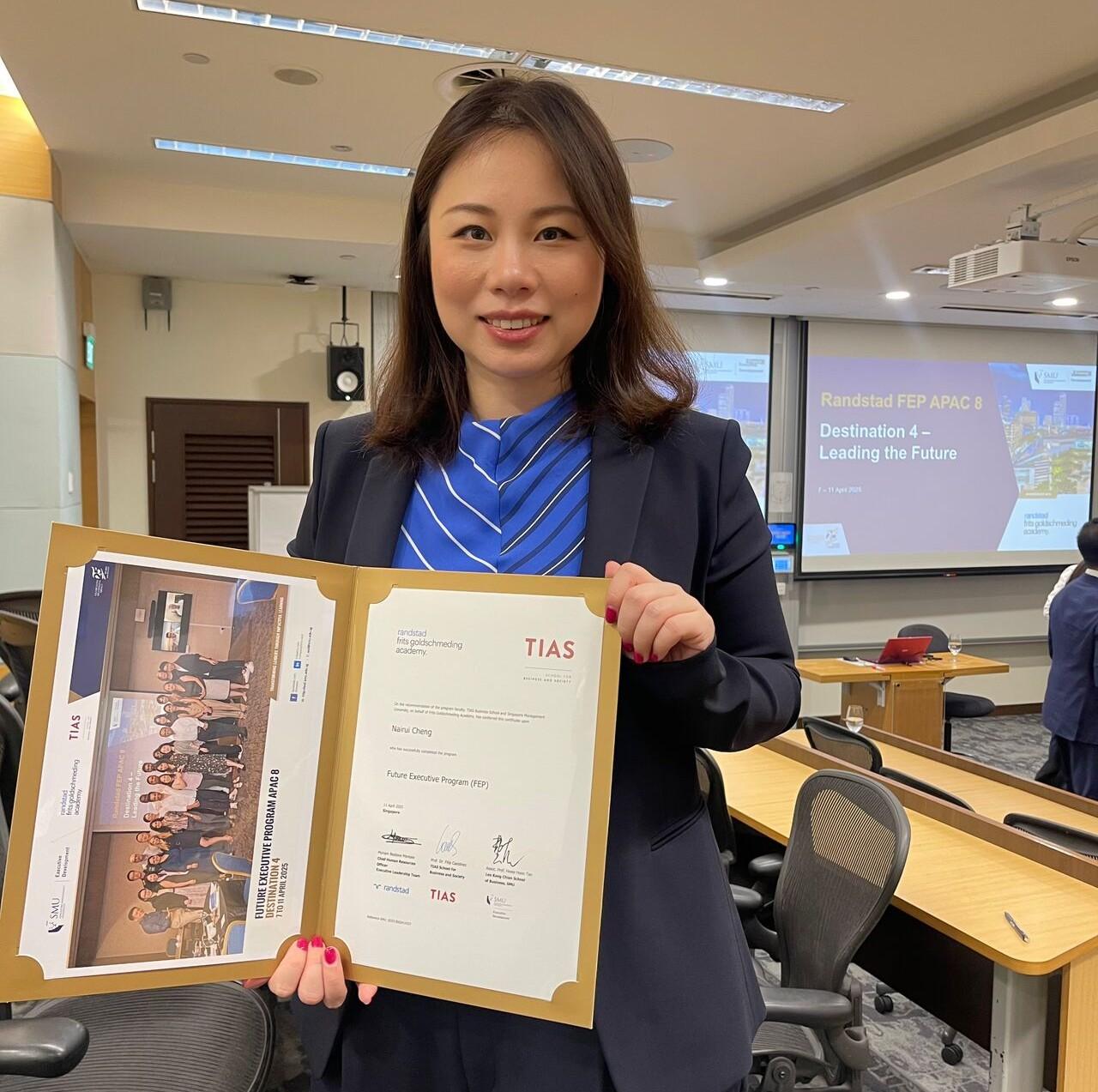
Nairui, who was born and raised in China, moved to the UK in high school and graduated from Imperial College London with a Master's in Mechanical Engineering. She barely spoke Japanese when she first started as a recruiter but she is now a 2-kyu level holder, which is considered business level fluency.
In the IT sector she was dealing with a lot of foreign and bilingual candidates, so her lack of Japanese language skills was not a real disadvantage.
“Back in the day it was much easier,” Nairui says. “Nowadays the market is different so if you don’t speak Japanese at all it could be difficult.”
Nairui says she entered the haken (temporary staffing) business by chance, but she stayed by choice. She could have moved to permanent recruitment during her nine years at Michael Page but says she has always enjoyed the fast pace of contracting. She also likes that she gets to negotiate every single deal with the client.
“I feel like in contracting I have more control,” she says.
In the fall of 2021, she was contacted by a recruiter focused on recruiting recruiters. It was an opportunity to lead Randstad’s middle to high level contracting business.
Nairui was used to receiving such scout calls and would usually turn them down, but something about this hit her differently.
“One, I knew that Randstad is a very established company. Two, I was amazed at the chance to start something from zero. Those two factors combined together made me feel interested. The casual interviews went very well and I felt it was good for my personal development as well,” she says.
She joined Randstad in February 2022 as an IT contracting specialist.
Randstad’s first impression

Despite all the internal changes that have happened at Randstad since she joined — both the MD and CEO who interviewed her are now gone and her hiring manager is now in another division — Nairui says her impression of the company has not changed.
“I do miss those people I worked with but I think our strategy is still consistent,” Nairui says. “Plus, I’m very grateful that myself and my entire business have been receiving support regardless of who my direct manager is or what division I belong to. I feel supported by upper management so I don’t feel like these changes really matter.”
When Nairui started, she was a one-person team. At its peak, her team consisted of 15 people.
How does she find people? A third of her team is from her own network, some are through her team members’ network, and others are people she proactively headhunted. Another channel of hiring was through Randstad’s talent acquisition referrals.
As the team gets bigger, Nairui does less recruiting because she’s naturally focused on other tasks.
“I used to do about 70% recruiting but now it’s more like 10%. I just don’t have time. I manage everyone by myself and my focus is shifting more to strategy planning and higher level steering. I’m also going to start a new team. That’s how my role has evolved,” Nairui says.
Nairui is happy with where she is at in terms of job content and responsibilities because she wants to stay close to her clients more on the sales side and not so much on the recruitment side.
“The reason is because recruitment is time-consuming and I would like to save this time to work on things that can help our business to grow faster,” she says.
“I need to bring my current business to the next level to be running more independently without me. If I can achieve that, I’d like to experience more business areas if the company provides me with the opportunity. I plan to stay with Randstad unless my impression of Randstad changes.”
The ‘why” behind the work
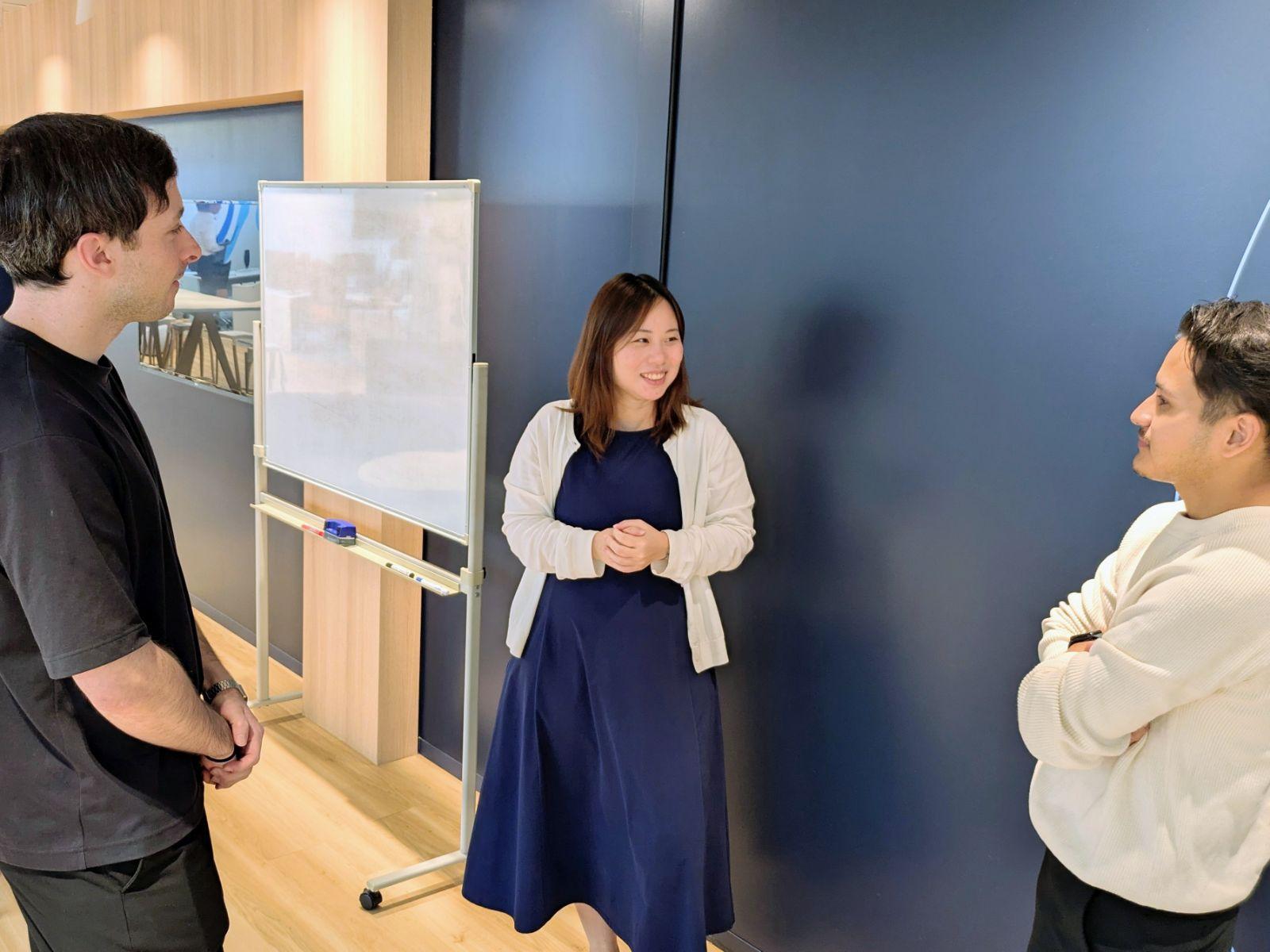
When hiring someone for her team, the first thing they must have, according to Nairui, is motive.
“Not like a reason why they want to join Randstad, but a reason for them to be doing whatever they’re going to be doing at their job. I don’t mind if their reason is to make more money, at least they have a reason,” Nairui says.
“It's the same with a candidate. If I’m giving someone career advice, being happy at work is important, but having a reason to work is more important. If they don’t know why they’re working and they’re not happy at their job, they should really consider why they’re still doing the job. You only live once, right? There’s no point in wasting time doing something without knowing why you’re doing it.”
Nairui’s “why” is seeing her team growing business-wise and individuals improving their performance.
She feels that in a big organization like Randstad, there are many ways in which she can unlock her career potential.
“For example, last week, I was sent to this future executive program in Singapore. There are so many opportunities for me to grow professionally and unlock my potential,” she says.
Before she went to Singapore, her 6-year-old daughter got sick, but Nairui was able to work from home thanks to Randstad’s flexible working policy. She says that it’s not easy being a working parent, but the company lets parents like her balance work and family life.
“Randstad is mature. I feel like other foreign recruitment companies have a very social culture, perhaps attracting a younger people , but at Randstad there are more people with families. I don’t know if this is deliberate, but being a large company I guess it makes sense because we have more diversity and mature people with more experience.”
Nairui’s day starts very early because it’s centered around her daughter’s school schedule. When she’s not working, she likes to tend to her vegetable garden and bake bread. She works in a fast-paced environment, but her hobbies are slow and meditative.
“I enjoy this flexibility,” Nairui says. “When my daughter comes home, I will stop my work, take care of her and have dinner with her. Once she goes to bed, if there’s anything urgent I might come back to my PC to reply to emails. When my team members receive late night emails from me, they know it’s because my daughter is asleep and not because I’m a workaholic.”